Holidays, holidays, holidays…

Friday 24 July 2026

In this sunniest of Summers, I am just back from a week on the Northumberland Coast with my girls! Holidays people – there’s really nothing like them…

I hail from a ‘holiday-ing family’! Throughout my childhood, every year we’d pack up the car and heads to our Welsh caravan for the entire Summer holiday. Six weeks of beautiful beaches, icy cold seas, steam trains, mountain climbs, fish and chips and hours of board games, laughter and family time. Kind of an ‘in a bubble’ experience, which had little to do with the life we led ‘back home’ but somehow made that life better and family bonds stronger.

And the same is true now that I’m a mum. Whether abroad or in the UK, our holidays have been great times and those shared experiences have made us a closer-knit unit. I don’t think the location actually matters, but spending time together does. It is a unique quality time, without the distractions of home and the sometimes stifling familiarity of the everyday. And I am not the only one who thinks so; here is the blurb you’ll find on most of the holiday sites!

According to an article published in TES by Elizabeth Buie, a staggering two thirds of conversations between parents and children revolve around their daily routine. A holiday away provides the perfect opportunity to break this conversation cycle and have more engaging exchanges with your children, plus gives you more time to get to know their individual personalities and notice how they’re growing, changing and developing as people.

Equally, I ponder, is it also a time in an adult relationship, those not eternally bonded by the unconditional love you feel for your kids, when you realise you are, or are not, on the same page. I recall a trip about 10 years ago to Rome with a guy I was seeing. As I explored the evocative forum, in my head imagining togas, great orators and the jaw dropping sophistication of that early culture, he had his eyes glued to a Google search for ‘Real Ale bars of Rome’. I’m not saying one is better than the other, and I’m sure many would opt for the beer, just that, as I found myself thinking

“I’d actually rather be here with my son or ex-hub; at least they’d have something interesting to say!’

… it was a sign that we were not as well suited as I’d previously thought.

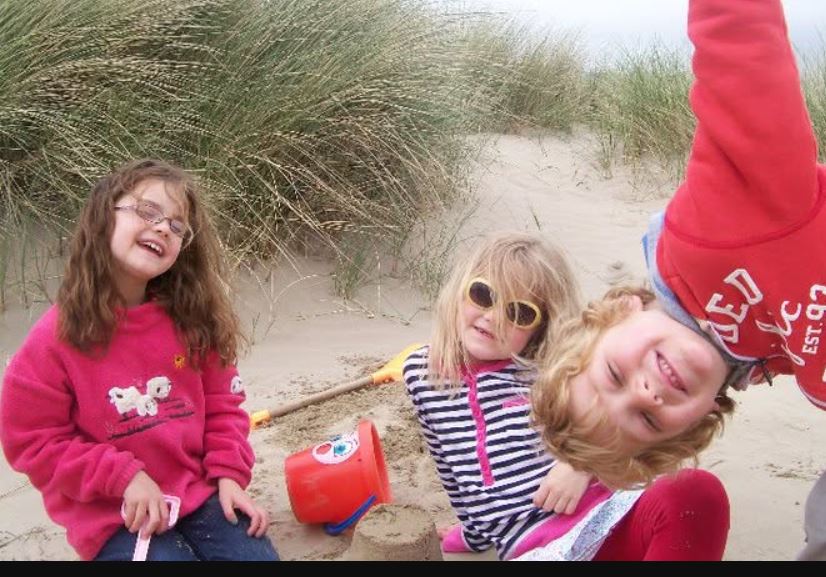
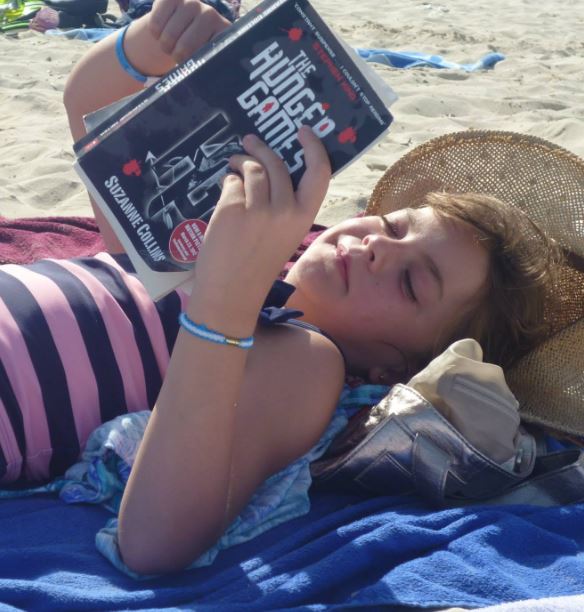
So, back to those happy family trips and  I’ll finish tonight with a photographic trip down Memory Lane. So glad we took the time to holiday together in the past and let’s hope we will carry on doing so even though my kids are now all grown-up! Holidays are magical times, and you’re never too old for a bit of magic!

Relationships by numbers…

Sunday 6 June 2021

You hear some strange things on the radio in the middle of the night…

Somewhere between teacher assessed grades, mass testing and track n’ tracing, work stress has made the grim descent into insomnia. Although I invariably zonk out effectively enough in an exhausted heap; by around 2am I am awake again, tossing and turning fretfully in a fruitless quest to return to the illusive REM-cycle. When my mind is really racing, I switch the radio on, hoping for distraction, and this is where, a few nights ago…I discover the notion of numbers linked to social and workplace interaction. It is claimed that,

You can only maintain so many close friendships

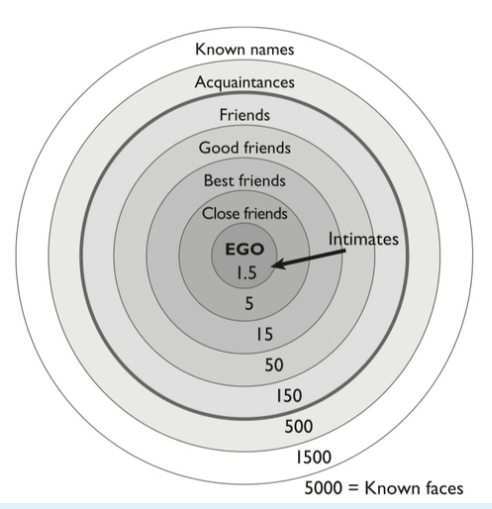
The central name in the debate is evolutionary psychologist Robin Dunbar, best known for 150, his namesake ‘Dunbar’s number’. Dunbar claims that this is the number of ‘stable relationships ‘ we are able, cognitively to maintain at once. It is his ‘wider circle of friends’ number, the amount you’d expect to see at your wedding, or imagine at your funeral, as opposed to your closest most trusted companions. On the radio, the guest expert applies this number to the workplace too, as the number where you could know each colleague not only by name but also know something of them as a person: their role, their family, their interests, their ambitions. Its suggested that although variation is inevitable, this is a suitable number for that sense of unity and community that hallmark effective organisations. When employee numbers rise too far above this, our expert continues, some businesses choose to open a second office or warehouse to break the workforce down into more sociable sized units.

Now this draws me in because 150 is pretty close to the number of colleagues I work with and all of this is certainly true for us. Additionally too, it catches my imagination because, as a mathematician, I have a long standing fascination with the seemingly mystical existence of numbers and number patterns in society, in music, in art and in our natural world. Oh yes, our wonderful cardinals refuse simply to be confined to the dusty pages of some academic tome!

Hence, as this audio item moves onto explore other numbers, I find myself wide-awake. The theory examines various friendship thresholds. Five is the ballpark for close friends – shoulder to cry on friends, the ones who share your happiest (or saddest) news first friends. It is proposed that this is why we so often see quintets, or their near neighbours, winning appeal in popular culture; Enid Blyton’s Famous 5, Friends, Scooby Doo‘s sleuthing squad and numerous rock and pop groups.

There is a long conversation about fifteen. In the relationship ranks, 15 is ‘best friends’ – around the number you’d have at a regular birthday meal, on a hen party weekend or those you’d call upon to look after your children. The radio discussion suggests that this stronger bond makes a suitable number for sporting teams and even expands to include Jesus and his disciples in the category.

From 15 they jump to 50 and then the renowned 150…

I lie there thinking it through for my life: reliving the times when friends did drop everything to support me and who they were, picturing the faces at my 30th Birthday Party or the various work teams I have contributed to and which worked well and which … less so. There or there abouts … those numbers work for me, although for a statistically minded soul, there is not a lot of space between 5 and 15 for variation! And I strongly suspect it was the clarity of definition of roles, rather than the size, that made several work teams successful or not. I imagine this could be an easy theory to challenge… from various directions.

Nonetheless, possibly akin to counting sheep, as I attempt to recall and count those who came to my Wedding I find myself drifting pleasantly off into a wonderful spell of sleep. I decide, whatever it limitations, that this is the theory for me after all…